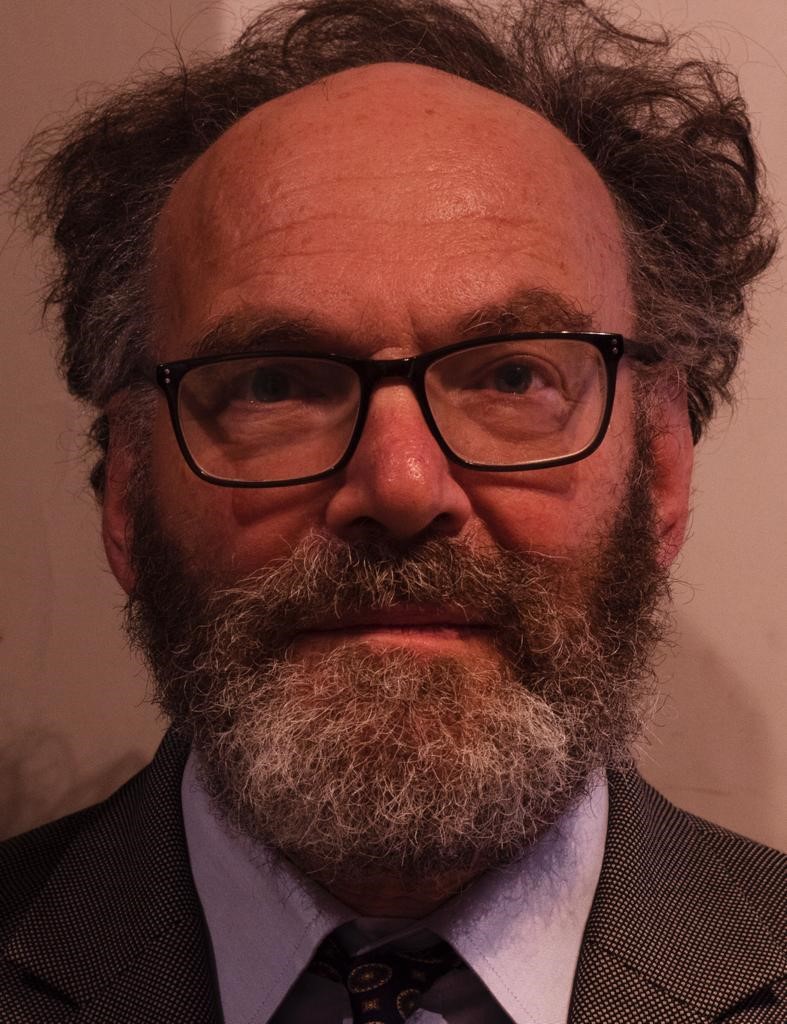
Vinod Sekhar’s Mystery backers in half a billion dollar ventilator deal with Hungary
Demand for ventilators at the beginning of the pandemic was so intense that buyers were ramping up the prices, bribing the ventilator makers with cash, snatching ventilators that they had agreed to sell to others for themselves. “It was capitalism at its nastiest, nasty nasty”, said Vinod Sekhar, who was trying to find ventilators for the government of Hungary.
Sekhar is a Malaysian businessman and owner of a group of business called Petra. As recent revelations in a KL courtroom disclose, Mr Sekhar was a very close acquaintance and supporter of Anwar Ibrahim, the Malaysian prime minister. Plaintiffs in a case against Sekhar have laid 400 pieces of evidence before the court demonstrating the two men’s close ties. Anwar is resisting the plaintiffs’ bid to have him testify in court[i].
“There was price gouging, where buyers were ramping up the prices of ventilators without any concern for the underlying value”.
The deal that Sekhar did with Hungary based on the price paid for COVID-related equipment was later attacked both in Malaysia and Hungary as gross profiteering. But perhaps the gouging forced the hand of the purchasers and they had no alternative but to pay excessive prices, even if Hungarian tax payers would have to foot the bill. It is estimated that the Hungary ventilator deal cost the Government of Hungary $500m. Following publication of the article on LinkedIn, these questions have been posed by a reader:
- Did Sekhar pay tax on the income that was sent to Green Rubber [as per the transactions described below] in relation to the Ventilator deal?
- Why were there payments on the bank account [described below] to former GR investors, including Jason Cowleard?
- Why was a payment made to a senior figure at Malaysia’s media regulator
- Why was a payment made to Vinod Sekhar’s lawyer and was this payment declared to the firm
The author will draw these questions to Mr Sekhar’s attention and request a response.
The context to this extraordinary deal is that Hungary’s Ministry of Foreign Affairs and Trade (HMFAT) had asked Sekhar to find 6,400 ventilators and other equipment at the beginning of the pandemic. He in turn found a Chinese partner.
New papers released by Transparency International’s Hungarian office show that the Hungarian Ministry of Foreign Affairs and Trade involved companies linked to Sekhar, Petra and his Green Rubber Technologies in a transaction for ventilators, testing kits and gloves that could have been worth $501m.
The documents are summarised below show two companies, one in Hong Kong and one in Singapore as recipients of the funds. They specify the prices charged by GR Technologies to the HMFAT.
In fact, Sekhar says that he was no more than a transitional stopping place for the funds and funds paid by the Hungarians were only sent to his Singaporean company as a temporary measure until the Hungarian client was prepared to pay a Chinese company, about whom it had concerns.
It raises the questions whether (some or all of) the funds only stopped with the Sekhar company before being transferred to the Chinese company or they stayed with the Singaporean company. Sekhar would be due a commission if he facilitated the purchase and the Chinese company provided the financial outlay for the ventilators.
“Initially they [the Hungarian payers] didn’t [feel] fully comfortable with a Chinese company and payment in China so there was an initial transitional payment done via Singapore but after the initial deposit and China started sending [ventilators] and the Chinese side was introduced directly to the Hungarian Ambassador in Beijing they were comfortable sending funds directly to them,” he said.
“For me it was a major issue as we don’t do this sort of business so I wasn’t comfortable being the safety conduit. As soon they were comfortable all was sent directly. We sent one of the RHB transfers back and asked them to send it directly to the Chinese. These kind of things give me unnecessary accounting and tax issues.”
“No financing institution was involved. It was all fairly straight forward. The Chinese side provided the items that were available and the prices and the authorities in Hungary chose what they wanted and that was it.”
Each ventilator was being charged to the Hungarians at between $75,000 and $82,000 each. This was a price one observer said was a multiple of the prevailing market price.
Sekhar was quoted in MalaysiaNow magazine on 28 July, 2021,
“Will we make money? It’s the normal percentage (in commissions). People gave their time and energy to secure it, and they should be paid,” he said. “Eventually, I’ll get the commission and I’ll make a donation to Hungary.”
Sekhar told the author in the autumn of 2025 that he did not make any money out of the deal. He further said that he made no percentage from the deal so there was no cause to make a donation. Coming back to London after a heart transplant in Chennai, the businessman was clear that he had not profited from the transaction.
Local Hungarian parliamentarians and observers, say the country paid double the prevailing market price, they say that the deal was not transparent.
Vadai Agnes, an opposition MP in Budapest noted the price differential between the market price and that paid by Hungary’s government.
“The Hungarian Ministry of Foreign Affairs and Trade [HMFAT] bought one ventilator unit for an average price of 19.8 million forints (RM270,000), while the National Healthcare Service Centre bought one unit for an average price of 10.8 million forints (RM147,000). And there is no explanation for such a price difference from the government,” said the parliamentarian.
Fellow opposition activist Katalin Boldis agreed that the procurement of the ventilators took place under “clearly suspicious circumstances”. “The purchase was concluded in an unjustifiably large number of units, with inadequate quality, overpriced and vague details,” Boldis told MalaysiaNow.
Officers from the National Financial Crime Centre (NFCC) and the Malaysian Anti-Corruption Commission (MACC), as well as from Bank Negara Malaysia and the Inland Revenue Board conducted raids at Petra Group’s offices on November 28, 2021. Petra said that it provided information voluntarily and the matter was closed. There has been no sign that the Malaysian government under Anwar Ibrahim intends to re-open the case. Sekhar is a noted supporter of the current prime minister.
The matter for Sekhar is clear. His Chinese partner, Li Jin Yan , a businessman and leading Chinese representative of the business community was forced to pay excessive prices in the market because of the price gouging.
“Everyone was trying to negotiate with these factories directly and they were having a nightmare trying to get it. Because you had the Germans going in, you had the Americans going in, you have everyone going in with bags of cash. You had an order today, and you expected to be picking it up tomorrow morning, but some American or German or someone else would go in with a bag of cash the night before, and give it to the factory. They had suddenly taken all the ventilators.
“So when you went in in the morning, they would say, “sorry, there was a mix up. Yours will be ready in another one week” You’re not going to contest what they say because you need the ventilators, right? It was nasty, nasty, it was the side of humanity you don’t really want to see again from a commercial sense. “
Trade was no easier from the side of the purchasers with the Hungarian government changing its mind repeatedly about the ventilators it wanted. It refused one shipment of 800 ventilators and the purchaser of one consignment, the Chinese entrepreneur Li Jin Yan, was left to carry the loss, at least until he found another buyer. “They were begging Li Jin to help. Li Jin had to swallow [the cost of] 800 ventilators trying to work out how to resell it. No, everyone doesn’t understand how complicated this whole thing was.”
A new tranche of documents about the deal provide the clues that lead to the Chinese business hierarchy and possibly provide a clue as to where some of the $500m that Hungary paid to keep its people alive during the COVID era went. Vinod Sekhar, the Malaysian entrepreneur and philanthropist, who has only recently returned to public life after having a heart transplant, has said he made no money from the deal.
Desperate times: desperate measures
In March 2020, Vinod Sekhar’s phones at his central Kuala Lumpur offices were buzzing at all hours of the day and night. The Malaysian entrepreneur’s sleep was getting interrupted non-stop. This was the height of the COVID-19 pandemic but Sekhar had rarely been more busy. When others had retreated to their house and their work was winding down, Sekhar and his wife Winy were motoring.
The calls were coming from all over the world. If it was not China whose timezone is the same as Malaysia’s, it was Hungary, which is seven hours behind Malaysia. Calls from Budapest (the Hungarian capital and seat of government) broke up Sekhar’s sleep but he took them all the same. There were calls too and from Sekhar’s lawyer in Australia, and he was three hours ahead of Malaysia. This was business, and business comes before sleep. This was not ordinary business, this was big business.
It was also urgent business, because this was related to COVID-19, which was storming round the world. Countries were terrified of being caught short of tools to allow their populations to survive the pandemic. Not least Italy which, in early 2020, had set the model for disaster with sick people filling the corridors of hospitals, doctors having to ration scarce ventilators, and by doing so, deciding who was to live and who die. When the first tally was done, in April 2020, Europe’s worst affected country was Italy. Italy’s plight was splattered across the media.
The second worst was Hungary. By 18 March 2020, local medical officials announced that the virus had spread to every part of the country and by June 2021, Hungary had the second-highest COVID-19 death rate in the world. The country’s urgency for medical equipment to combat the epidemic was understandable. Like much of the world, it was also desperately short of ventilators.
Break through for Sekhar
Vinod Sekhar was planning to build a factory in Hungary to make his green rubber compound when COVID started to spread. This is a chemical process discovered by Sekhar’s father BC Sekhar that Vinod Sekhar has endeavoured to industrialise. Sekhar’s connections to Asia led the government of Viktor Orban to approach him to find a source first for gloves, then for testing kits and finally for ventilators, Sekhar says. This last was a much harder task, as the machinery was in massive demand. Sekhar went to colleagues in Singapore and Malaysia to no avail, in fact he says that he was nearly conned by middlemen. This was a helter-skelter, and there was no time to lose.
He would now parlay his Chinese contacts, in particular a wealthy Chinese businessman Dr Yan Li Jin. He was ready to come to the aid of the Hungarian Ministry of Health and the Hungarian Ministry of Finance and Trade. Sekhar said that in due course, he facilitated a meeting between Yan Li Jin and the Hungarian ambassador to Beijing through his Petra Group and GR Technologies. Connections to Chinese industrialists, factory owners and middle men enabled Sekhar to access ventilators, masks and PCR testing kits to satisfy the Hungarian demands.
Yan Li Jin opened doors to the people Sekhar needed on his side. He was a senior engineer and economist with some high profile positions in China including the presidency of the Silk Road International Foundation and chairmanship of the China Silk Road Group.
Yan Li Jin was also linked to Malaysia through his position as senior vice president of United World Chinese Association[ii] based in KL. Yan Li Jin’s communications say he is “committed to international cooperation and the electronic information industry. He takes an active role in participating in international contact and cooperation and has made a great contribution to promoting the relationship between China and other countries.”
L’Epoque USA magazine profiled Yan Li Jin in September 2024.[iii] He is currently the Director of Law and Globalization Research Center in Renmin University of China, which is closely connected to the University of Oxford. [iv]
Social business to the fore
Charges of price gouging do not go down well with Sekhar who presents himself as a businessman and philanthropist with a vision that reaches beyond the bottom line. Business can have a social conscience, a care for humanity and a higher purpose. In his model of social capitalism, profit is not all, even if it is essential for business to sustain
“He was sending people everywhere to try and negotiate with everyone. To try and get something. He had to get bits and pieces. [There were] 50 here, 20 there, 30 of this. Messages were sent to the Hungarians. “There are 30 of these available at this price. Do you want it? There are 20 of this available at this price. Do you want it?” You know, and then they would just say, “no, no, yes, yes, yes, yes, no, no”.
On top of the logistics was the pricing of the equipment. Documents provided by Transparency International to the author show that the Chinese partner headed by Yan Li Jin passed on the prices that they were having to pay for the ventilators in the market to Sekhar’s companies and then these companies put these prices into the form of an agreement or contract and these were then sent to the Hungarian government for their approval.
Price does not appear to have been an issue for the Hungarian government who were clamouring for ventilators and some local commentators observed that they were agreeing to pay a multiple for the going rate for ventilators. Contracts seen by the author show prices for ventilators ranging between $75,000 and $82,000 depending on their specifications. Markets for all equipment related to COVID-19 were vastly unstable at the time and concepts like a “going price” for equipment that was experiencing such intense demand and supply instability were highly speculative.
Nasty Capitalism
The prices paid by the Hungarian, while top of the market, had also to include the cost and time taken in coping with logistical challenges. Sekhar described the purloining of ventilators shipments even while they were on the airport runway waiting to be loaded on to transportation planes by buyers offering higher prices. Planes for charter were scarce and prices were rising sharply.
Sekhar recalled that “price gouging” was rampant. This is where people charge excessively high, unfair prices for essential goods and services (like water, fuel, masks) during a crisis (disaster, pandemic) when demand spikes and supply drops, exploiting consumers’ urgent needs for profit. Price gouging can be illegal if a country has a law aimed at preventing profiteering in emergencies.
The Hungarian government unquestionably paid exceptionally high prices for the ventilators, but they had no choice in these exceptional market conditions, the Malaysian entrepreneur said. He also said the assignment was made more complicated by their indecision over the quality of ventilators they were seeking.
The disclosure of a number of contracts and electronic banking notifications involving these ventilators, testing units and other COVID-deals give an insight into the prices and quantities of equipment that the Hungarian government bought from GR Technologies and Petra Group. Some of these documents are summarised below.
Revelations: A tranche of Documents
Contract on 26 March 2020
In one contact obtained by the author and dated March 26, 2020, GR Technologies, which describes itself on the written agreement as ‘in the business of distributing invasive medical ventilator devices suitable for use ‘within intensive care units of hospitals’, agreed to sell to the Hungarian health ministry 800 of such units at a price of between $75,000 and $82,000 per unit. The total amount was $58.8m. The buyer agreed to pay 2% upfront and the remainder once the seller had provided all details including final pricing, delivery schedule, detailed specification and payment terms.
The advance payment of $58m for the 800 ventilators was to arrive before 11pm on 27 March. Shipment was far from straightforward at this time of stress, and the contract specifies that if COVID conditions impaired shipment, Sekhar would make sure the ventilators got to Hungary. “Due to the present situation, the air cargo situation keeps changing. The seller will charter a flight to Budapest”.
If the parties could not agree the final terms, the buyer would receive 100 ventilators for their 2% upfront payment. The contract says that the parties would sign another contract for Hungary to purchase a further 5,200 ventilators, bringing the total to 6,000 ventilators.
Sekhar says that one deal for 800 ventilators was rescinded and Yan Li Jin, the wealthy Chinese intermediary working for Sekhar had to find a new buyer. If the Chinese businessman had already paid for the 800 ventilators, he would have to accept the loss.
The pivotal role of the Chinese entrepreneur in sourcing and financing the ventilator purchase is clear from a statement Mr Sekhar gave to the author related to the process of payment.
Contract on 27 March 2020
On 27 March 2020, a contract describes the sale of 6,400 invasive Medical Ventilator Devices at a unit price of $75,500 by GR Technologies to the Hungarian Ministry of Foreign Affairs and Trade, Federal Government for a total price of $508.8m. The Hungarians had already paid the 2% deposit demanded making the final price $501.6m.
According to the GR contract, the Hungarian government was required to pay 20% of the total, that is $100.32m in advance and the balance after seven days. The contract allows the seller to increase the FOB [freight on board] price by 10% “if market conditions change dramatically”. Dr Casaba Balogh, a government official from Hungarian Ministry of Foreign Affairs and Trade signed for the Hungarian Ministry of Finance and Trade.
Hungary had to pay for the charter of a flight by GR Technologies, ‘with the prior approval of the buyer’. The beneficiaries of this vast transfer are Silk Road Development Fund Management Holding whose bank account was at the Bank of Communications in Hong Kong and Havelock International whose bank account was at RHB Bank Singapore. It should be noted that Dr Yan Li Jin, Sekhar’s business partner, was President of the Silk Road International Foundation and Chairman of China Silk Road Group. The latter’s address is given [in a corporate directory] as Room S3 17/F W LUXE 5 ON YIU ST Sha Tin, New Territories Hong Kong.
Money received by the accounts at the Hong Kong or Singapore banks appeared to have covered the full payment for the ventilators. The Contract of 27 March between GR Technologies and the Ministry of Finance and Trade specifies that payments be split between Silk Road Development Fund Management Holding and Havelock International (Pte) Ltd. The total paid by Hungary was to be $501.6m, the sum of $75,000 times 6,400 a unit.
The two companies are described as beneficiaries in the contract of 26 March, which details the supply of 800 ventilators (although there is an agreement to supply 5,200 making a total of 6000. This is 400 fewer than the parties agreed to the following day).
Was the Chinese party linked to Dr Yan Li Jin a beneficiary in the payment chain from funds redirected by GR Technologies? Were the Hungarians dealing directly with Dr Yan Li Jin?
Buyers and sellers were not required to disclose the terms of their deal but it is a moot point whether the seller in this transaction (whether Chinese or Malaysian) could avoid engaging in price gouging at a time of a health crisis. Yan Li Jin could not be reached for comment. Sekhar told me at a breakfast meeting in the autumn of 2025 that he made no money from the ventilator deal and did it to help the Hungarian people at their time of need.
Transparency International’s Hungarian office is in no doubt that the deal with its government, was a bad one for Hungary. Miklos Ligetia of Transparency International Hungary said, ‘we believe this transaction was unfounded and it intentionally harmed Hungary’s financial interest.”
[i] https://www.malaysiakini.com/news/774735
[ii] https://www.uwcasea.com/en
[iii] https://www.lepoquemagazine.com/l-epoque-usa-portrait-dr-yan-lijin-mastermind-of-global-strategy
[iv] https://www.law.ox.ac.uk/people/lijin-yan